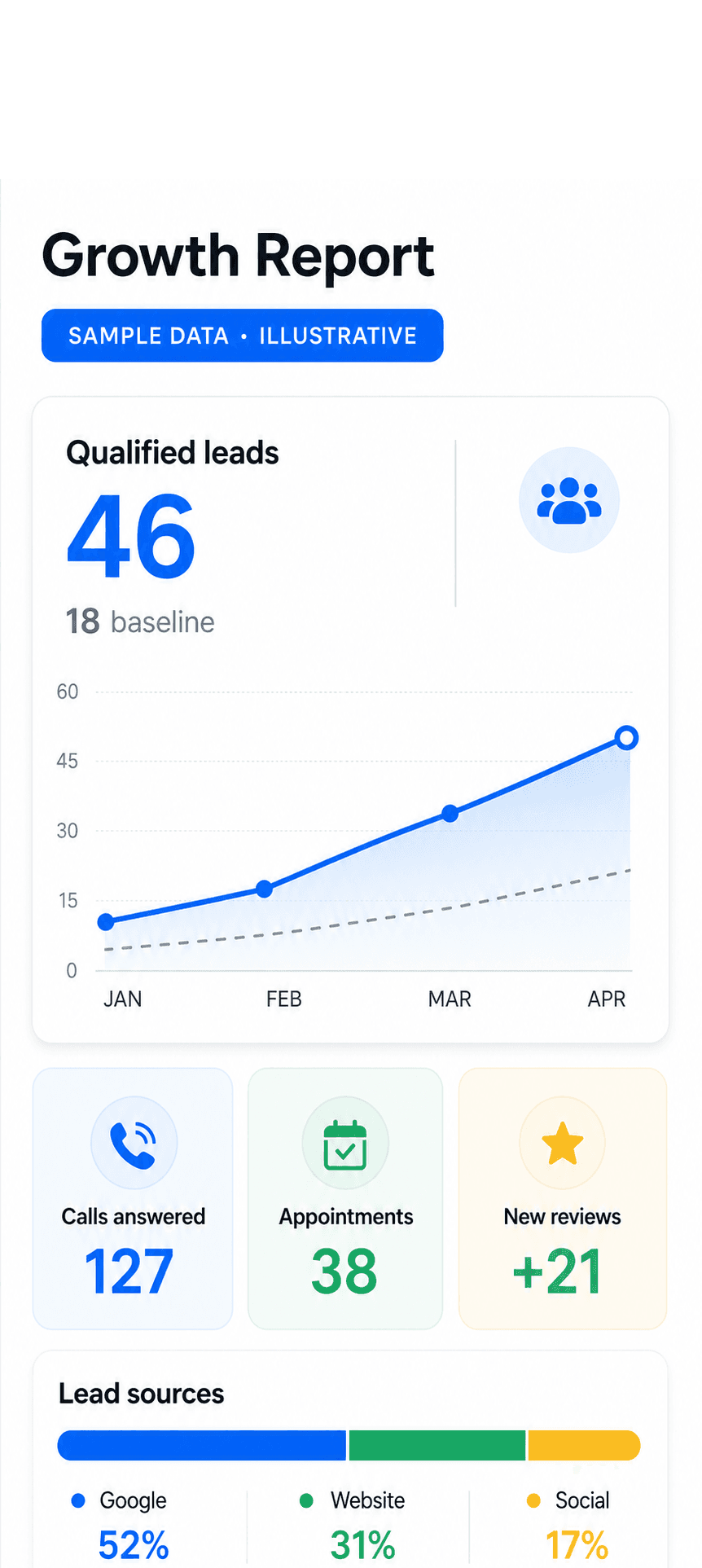
A stronger online presence
Look professional. Get found. Make it easy to choose you.
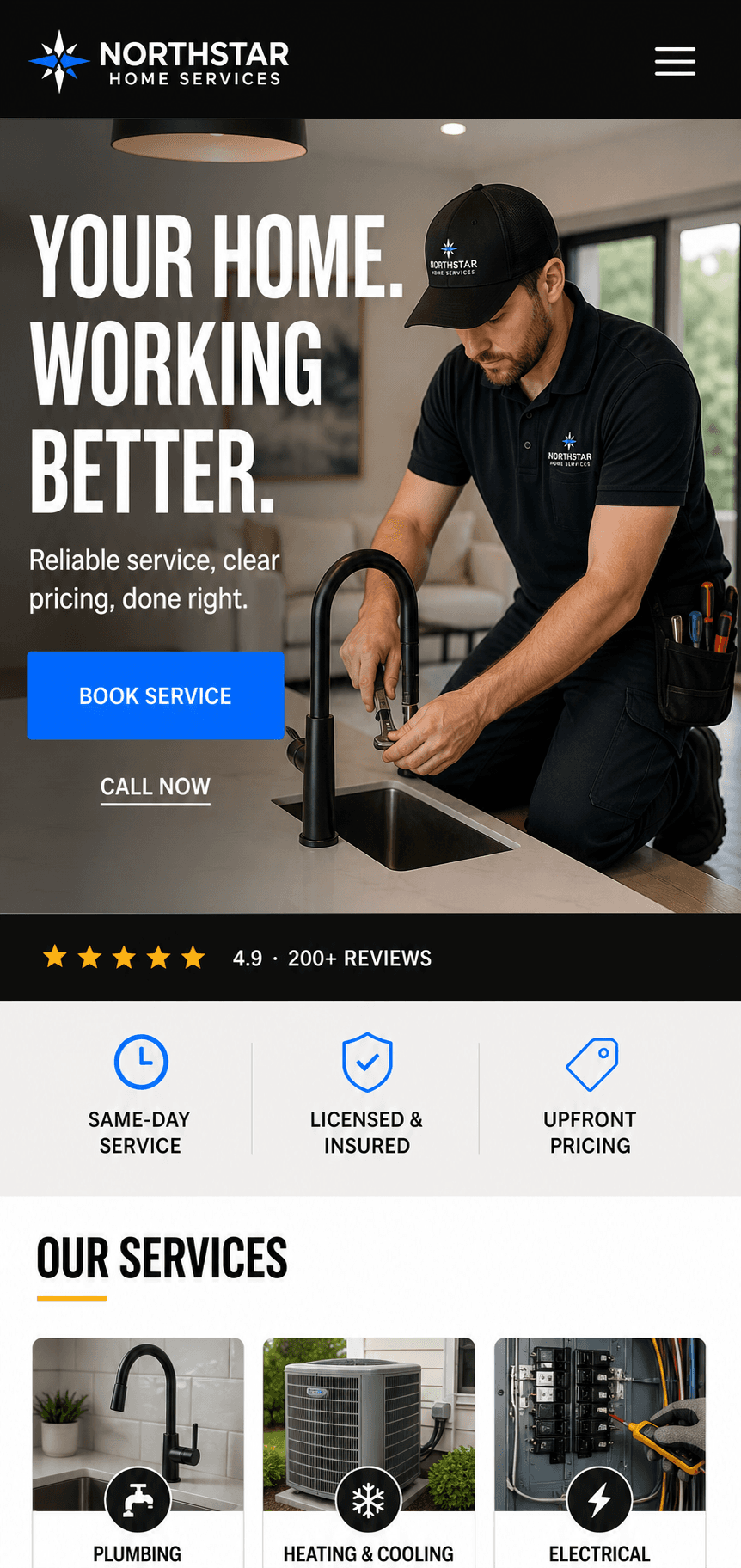
Most customers meet your business online before they ever call, visit, or request a quote. They scan your website, compare Google results, read reviews, and look for signs that you are credible and easy to work with. A strong online presence makes those decisions easier.
1. Start with a professional, conversion-focused website
Your website should immediately explain what you do, who you serve, and where you work. Clear headlines, real service information, readable type, and fast mobile performance matter more than decorative effects.
- Lead with the customer problem you solve.
- Show your main services without making people hunt.
- Use trust signals such as reviews, photos, and credentials.
- Check every important page on an actual phone.
2. Make it easy to call, book, or request a quote
Every important page needs one obvious next step. Put the primary action where people can see it, explain what happens after they click, and keep forms short enough to complete without friction.
A visitor should never have to guess whether to call, send a message, or wait for a response. Consistent calls to action turn a good-looking website into a useful business tool.
Everything works together
Your online presence should make the next step obvious.

3. Strengthen your Google and AI-search visibility
Search visibility begins with accurate business information, useful service pages, and a complete Google Business Profile. Keep your name, service area, phone number, hours, and categories consistent wherever your business appears.
AI-powered search also depends on clear, trustworthy information. Write for customers first, answer common questions directly, and avoid claims you cannot support. No agency can guarantee a ranking, but a well-structured presence gives search systems better information to understand.
The best online presence reduces uncertainty and makes the next step obvious.
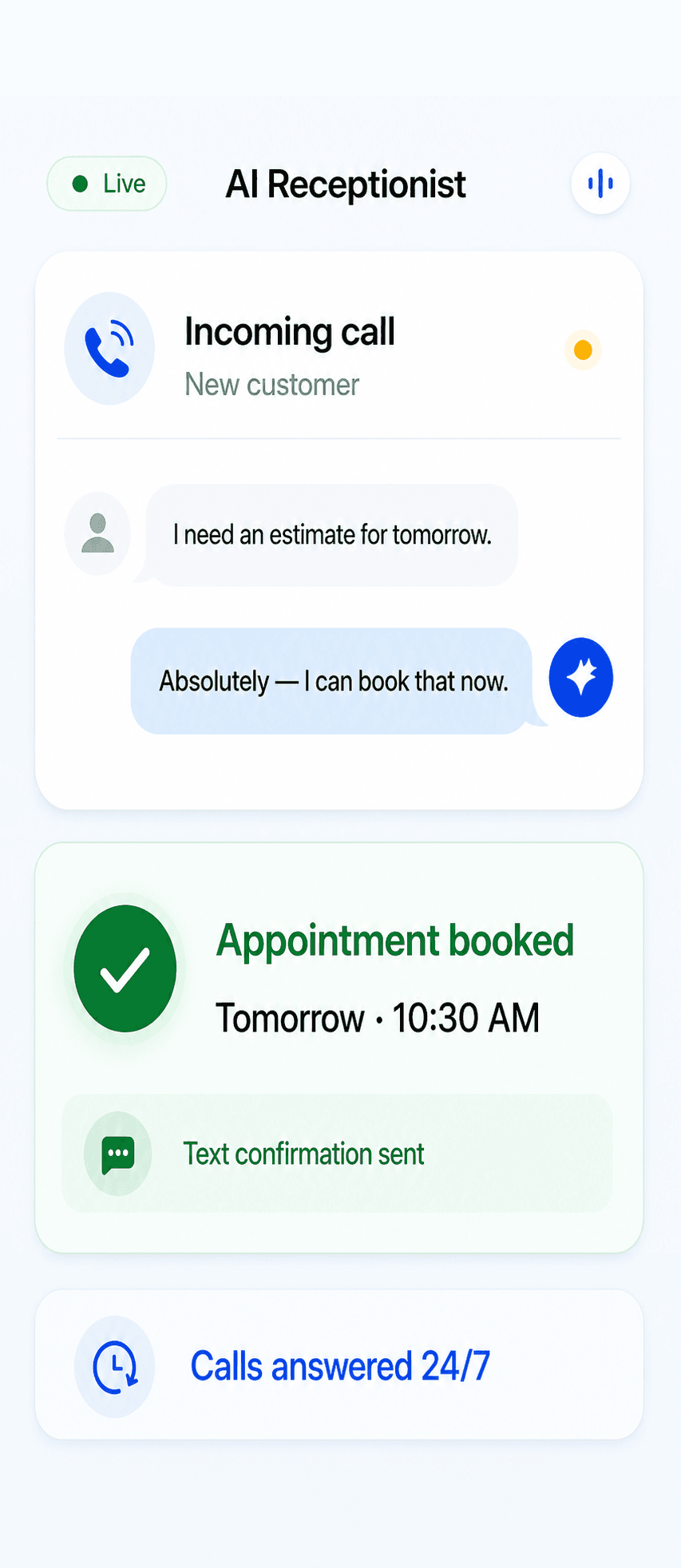
4. Answer every lead quickly with an AI receptionist
Speed matters when someone is ready to hire. An AI receptionist can answer routine calls, collect contact details, explain basic service information, and help with scheduling outside normal business hours.
Automation should support your team, not pretend every situation is simple. Define when a call needs a person, review scripts and summaries regularly, and keep pricing, availability, and policies current.
5. Keep your message consistent across social media and paid ads
Social posts and paid campaigns work better when they reinforce the same promise customers see on your website. Use consistent service names, visuals, offers, and calls to action, then send each campaign to a page that matches the ad.
Review results as a complete journey—from impression to call or form submission—not as isolated likes or clicks. That makes it easier to improve what customers actually experience.